
COAST DISCOVERY
Tristan Stone
A roadside stone carrying one of Cornwall’s oldest legends.
COAST
Tristan Stone
The Tristan Stone stands beside the road into Fowey, an early medieval memorial carved with a name that has drawn it into one of Cornwall’s most enduring legends. The inscription records Drustanus, son of Cunomorus, names long associated with Tristan and King Mark.
“Some places stand between history and legend.”
The Tristan Stone is easy to pass without noticing. It stands beside the A3082 on the approach to Fowey, a tall granite shaft set close to the roadside, carrying an inscription whose weathered letters have attracted antiquarian interest for centuries.
The inscription is usually read as “Drustanus lies here, son of Cunomorus”. Historic England identifies the monument as an early Christian memorial stone, probably dating somewhere between the fifth or sixth centuries and the eleventh century. A Tau cross appears in relief on the opposite face, while a mortice at the top shows that the stone was later adapted for use as a wayside cross. Historic England
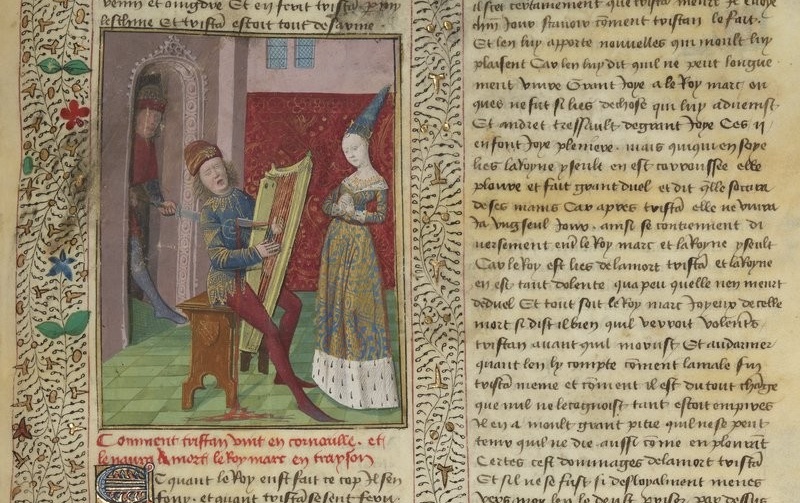
What gives the stone its particular power is the possibility that Drustanus became the Tristan of medieval legend, and that Cunomorus became King Mark of Cornwall. That connection cannot be proved, but it has shaped the way the stone has been understood for generations. Nearby Castle Dore has also been associated with King Mark in later tradition. Standing beside a modern road, the stone occupies an unusual space between archaeology and story. It is both a surviving early medieval monument and a place onto which Cornwall has projected one of its great narratives of love, loyalty and betrayal.
Practical Notes